Shopping for an Electric Bike? What the Motor Changes, and What It Doesn't
Weight, braking distance, class limits, and the ordinary fit questions that a motor does not touch, plus what each of those changes actually costs you.
choosing and living with a pedal-assist electric bicycle: fit, drivetrain type, battery range, and running costs
Blake BW
- 01
Down tube versus rack battery
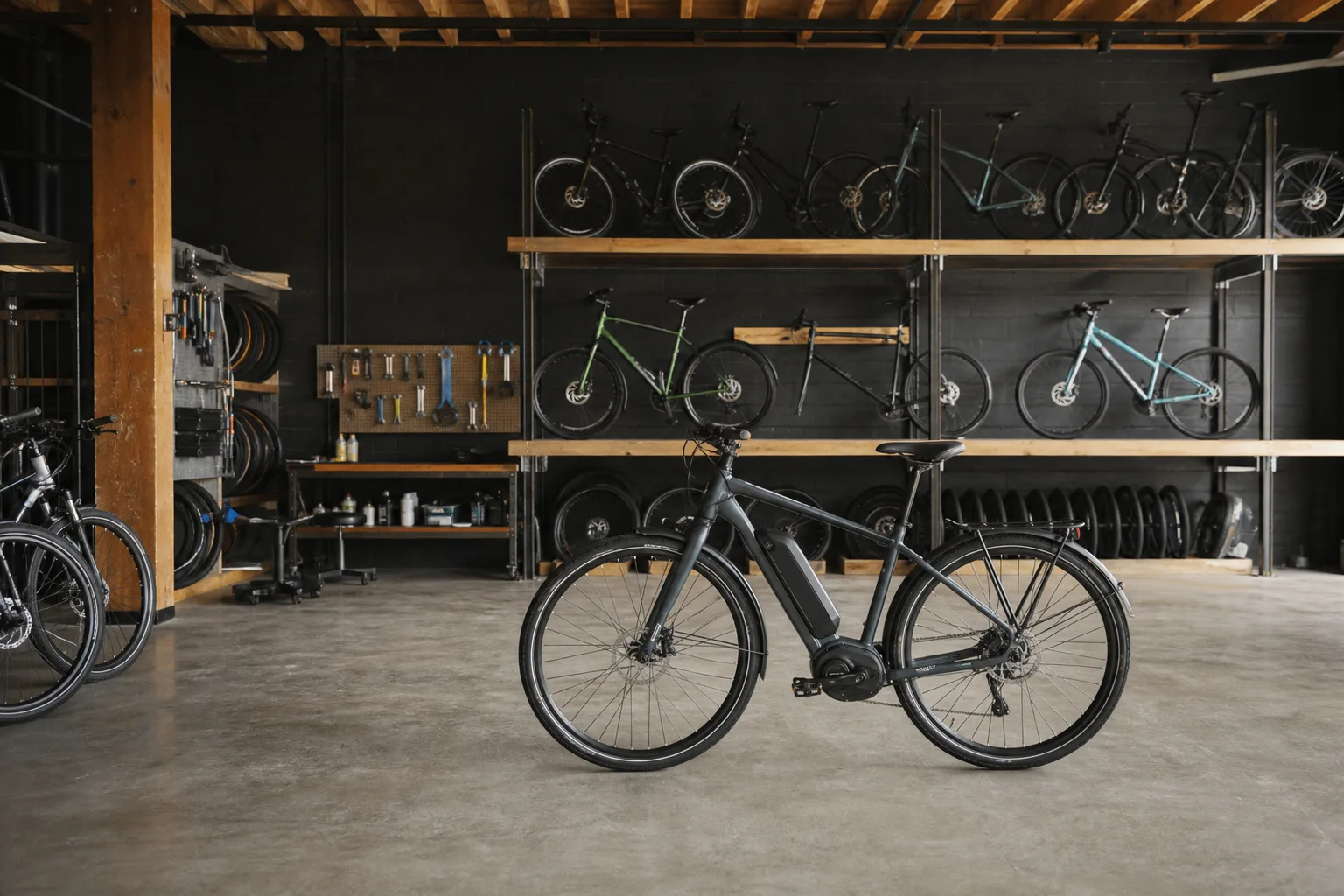
A battery integrated into the down tube keeps weight low and centered, so the bike handles close to an unpowered one. A rack-mounted pack sits high and rearward, which makes the front end feel light when maneuvering slowly.
- 02
Spokes and rims
Heavier bikes with motor torque break spokes that were specified for a lighter machine. Thicker gauge spokes and wider rims are a sign the frame was engineered around the motor rather than adapted to it.
- 03
Hydraulic disc brakes
Larger rotors and hydraulic actuation are the practical standard on well-built pedal-assist bikes because of the extra mass and speed. Mechanical discs work, but fade sooner on long descents.
A pedal-assist bicycle is still steered, balanced, and stopped by the same rider using the same techniques, which is why the transition from a regular bike takes about ten minutes rather than a lesson. What changes is everything downstream of mass. A motor, a controller, and a battery pack add something in the range of fifteen to thirty pounds depending on the design, and that weight is neither small nor evenly placed. The interesting part is not the weight itself, which is obvious, but what the weight goes on to demand from the rest of the bike and from you.
Where the weight sits, and what it asks of the frame
Battery placement drives handling more than battery size does. A pack integrated into the down tube keeps the mass low and near the center, so the bike leans and returns to upright much like an unpowered one, only heavier. A rack-mounted pack behind the seatpost puts several pounds high and far back, which makes the front end feel light at low speed and makes the bike want to swing when you walk it around a corner in a garage. Rear hub motors add unsprung weight at the wheel, and you feel that over railroad crossings and broken pavement. None of this is disqualifying. It just decides which bike suits the parking, the stairs, and the errands you actually have.
The cost of that weight is paid in components. A frame carrying an extra twenty-five pounds and delivering motor torque through the chain needs stronger dropouts, thicker spokes, wider rims, and tires with more casing than a comparable analog bike. Manufacturers who do this properly charge for it, and the ones who don't produce bikes that eat rear spokes. When comparing two machines at similar prices, look at spoke gauge, rim width, and whether the tires carry any load rating at all, because those quiet specifications tell you whether the frame was designed around the motor or had one bolted to it.
Braking distance is the real change
You will arrive at the stop sign faster and carrying more mass, and both of those extend the distance to zero. Hydraulic disc brakes with rotors of 180 millimeters or larger are standard on well-specified pedal-assist bikes for exactly this reason, and mechanical discs on a heavy bike with a strong rider are a compromise you notice on a long descent. Pads wear faster. Rotors need truing occasionally. Budget for brake service two or three times as often as you would on a bicycle you pedal unassisted, and treat a squealing rear brake as an appointment rather than an annoyance. The braking upgrade is where a lot of the price difference between tiers genuinely goes.
Class limits, and why they follow you around
Most states have adopted a three-class framework: Class 1 is pedal-assist to 20 mph, Class 2 adds a throttle to the same speed, and Class 3 is pedal-assist to 28 mph. The number stamped on the frame decides which bike paths, greenways, and park trails you may legally use, and in many places Class 3 is excluded from exactly the paved multi-use paths people buy these bikes to ride. The Consumer Product Safety Commission oversees the federal product rules that sit underneath all of this. Before you choose a class, check the trail you plan to use on Tuesdays, not the one you imagine using in June.
The ordinary questions that did not change
Saddle height, reach to the bars, standover clearance, gear range for the hills near you, and tire volume for the surfaces you ride are all decided the same way they were before anyone attached a battery. A frame that puts too much weight on your hands stays wrong at 18 mph. Fit is still the first filter, which is why the search that starts with a womens electric bike is really a search about standover, reach, and saddle geometry, and the motor is the last variable rather than the first. Test ride with the assist switched off for part of the loop, because that tells you what the bike is when the battery is empty.
Running costs follow the same pattern of small obvious change and larger second-order change. Electricity to charge a pack is measured in pennies per charge and is not worth thinking about. Drivetrain wear is worth thinking about: motor torque plus higher average speed means chains and cassettes reach their replacement point on a shorter calendar than most riders expect, and a stretched chain grinds a cassette that costs several times what the chain did. Tires wear faster too. The battery itself is the largest scheduled expense in the bike's life, arriving somewhere past the warranty, and knowing the replacement price before you buy converts a future shock into a known line item.
Buy the bike that fits, on the class you can legally ride where you actually ride, with brakes rated for the weight it carries, and the motor becomes what it should be: a quiet extension of the range you already had.
Pads and rotors wear noticeably faster than on an unassisted bicycle. Plan on brake attention several times a year rather than once, and treat persistent squeal as a service item.
Blake BW Many paved multi-use paths permit Class 1 and 2 but exclude Class 3. Verify the rules for the route you ride on ordinary weekdays before choosing a class.